
Can genes change?
We usually think of genes as fixed instructions. Anyone who has tried to go blonde with dark hair knows this very well: no matter how expensive the salon treatment, the colour only lasts until new hair grows in. The genes just continue to do what they were programmed to do: generating dark hair.
No matter how much we want it, how much we pray or meditate, no matter how much we feel we were supposed to be born in a blonde body, our dark hair genes will not change.
Or will they?
Because something strange happens to our hair as we age — it turns grey.
So what happens to all that dark pigment then? Our genes still contain the instructions for producing dark hair colour. But then, suddenly, the colour disappears.
Does the genes themselves turn grey?
Not quite.
And this is precisely the subject of epigenetics.
Enter: Epigenetics
One of the central questions in epigenetics is this:
How can cells in our body be so different when they all contain the same genes?
Take one of your liver cells, for example. In theory, it contains almost the full story of you: the genes that influence your hair colour, digestion, susceptibility to seasickness and even your enjoyment of dancing. One day it may even be possible to clone you from just this one liver cell.
Yet it is only a liver cell and it will never use most of these genes. The liver does not need eye color and does not dance.
This is where epigenetics comes in: which cells use which genes, and who decides?
Pigment Profis
One cell type that definitely uses our inherited pigment genes is the melanocyte. Melanocytes live in the skin and our pigmented “fur” coating (hair and body hair).
In these cells, pigment-related genes are active and accessible, whenever a new batch of pigment needs to be deposited into the growing hair. In the language of epigenetics, these genes are ‘upregulated’: the cell can easily locate them whenever new pigment needs to be produced.
Meanwhile, thousands of other genes — those needed for muscles, nerves or liver function, for example — are tidily packed away so that they do not interfere with the melanocyte’s job.
In other words, epigenetics is a kind of cellular organisational system in which each cell uses only the parts of the genetic library it needs.
So why do we go grey then?
Greying is not caused by our genes suddenly “changing colour”.
Instead, it is the result of age-related epigenetic changes.
Producing pigment is metabolically expensive.
As we age, the body gradually stops investing in processes that are not essential for survival. The pigment-producing cells in the hair follicle are among the first to be affected.
Shiny, naturally coloured hair is just as important as the colourful plumage of birds for signalling general health, but the proteins used to build such an evolutionary crown are expensive. Why spend on such a costly ornamental display when the body’s natural reproductive capacity is declining anyway?
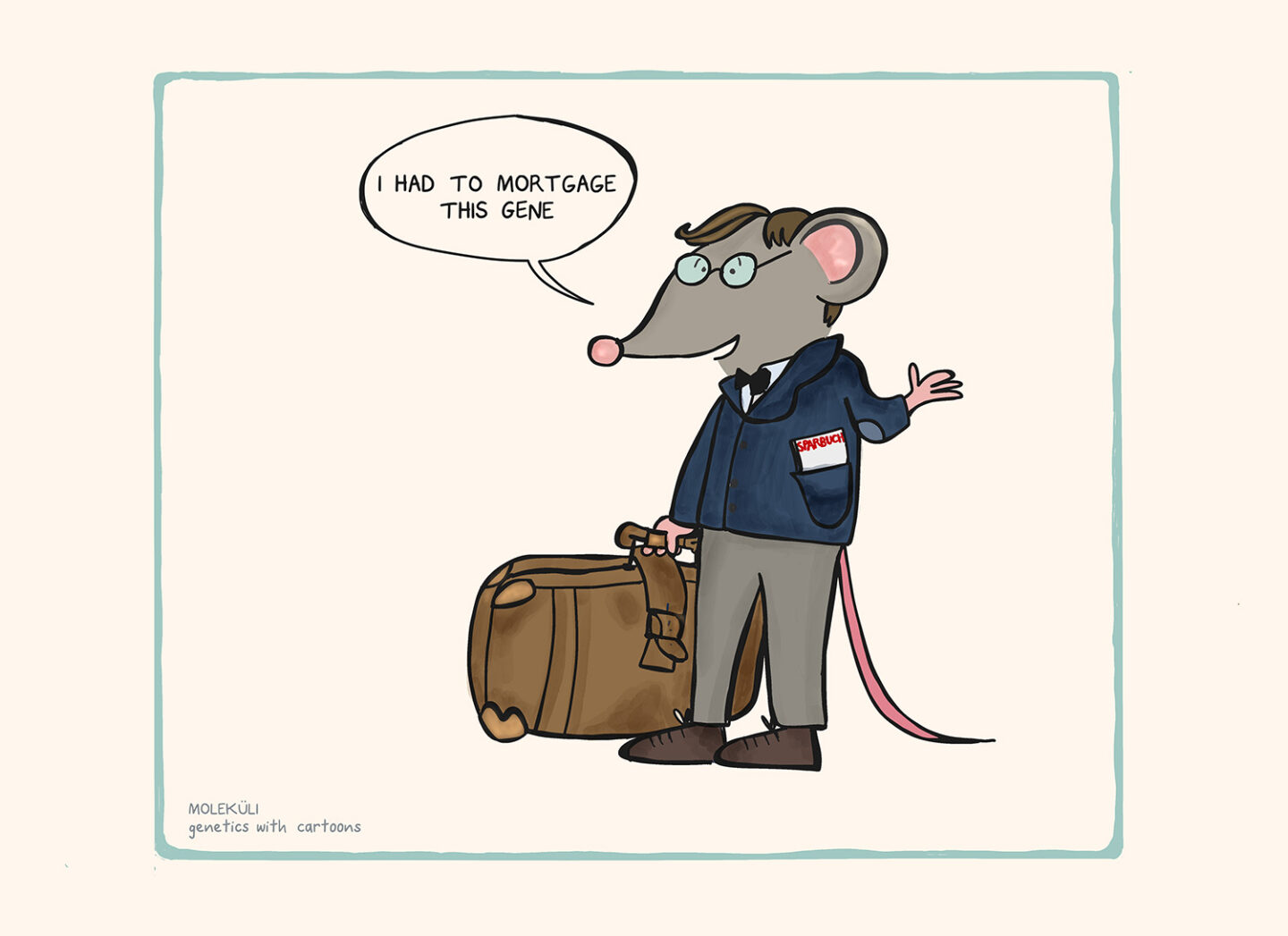
Over time, the genes responsible for producing pigment become less active and will be “packed away”. Eventually, the melanocytes themselves decline or disappear.
The result is straightforward: the hair continues to grow, but without pigment.
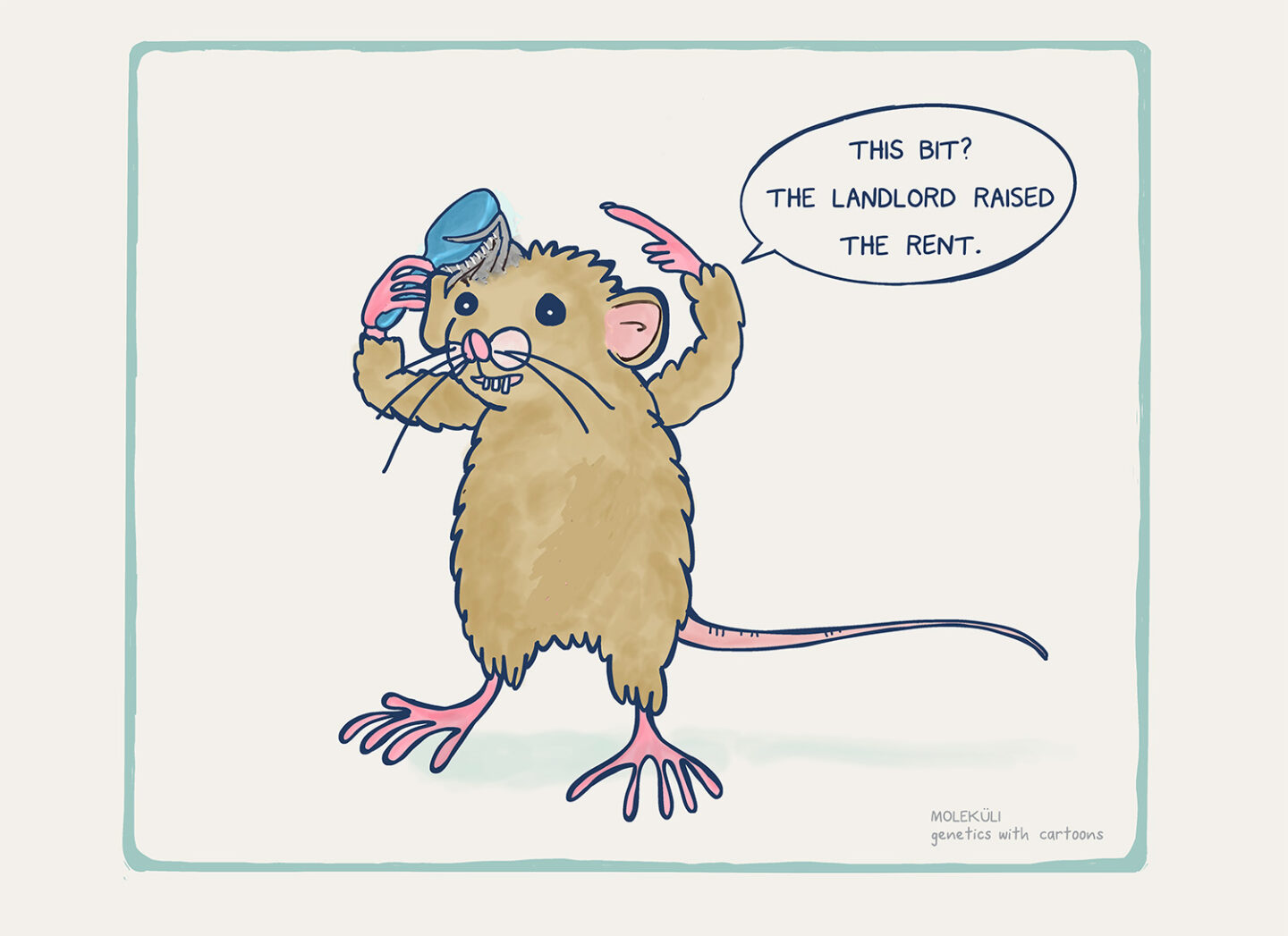
This is how grey hair appears.
Stress and Nutrition
The epigenetic twist is that these processes can be influenced by environmental factors. This explains how stress (even psychological stress), poor nutrition and medication can contribute to premature greying of the hair.
So, the answer to the questions ‘Why do we go grey?’ and ‘Do our genes change when we go grey?’ is: There is no grey hair gene. Our pigment genes stay in every single cell of our body forever. Over time, however, these genes are switched off via chemical packaging processes, which is one type of epigenetic regulation.
My father had already grey hair when I was born. Does my dad’s grey hair mean I was born from an inactive genome?
The amazing thing is that even when many of the parents’ genes are already “inactive” due to ageing, their egg and sperm cells contain a freshly reactivated genome and are ready to create a brand new human being.
However, there is a grain of truth to this question. Sperm contain a super condensed and highly methylated genome, meaning the majority of the sperm DNA is epigenetically silenced. This is because the sperm DNA is treated like a highly guarded VIP, sitting in a condensed, bulletproof vest that protects it against bullets (epimutations) and chemical attacks (oxidative stress) and “junk DNA” (transposable elements).
This means that, regardless of what happens to the owner of the sperm, whether he is going grey or not, his sperm are kept in this highly protected, genetically frozen state. Using the popular metaphor: sperm are like biological USB USB sticks: they deliver code, but don’t execute it.
After fertilisation, though, a wave of demethylation sweeps over the DNA: a bit like shaking out a dusty library to make room for a brand new blueprint.

Now comes the part where you think:
Wait, Did Someone Actually Ask That?
Yes, they did.
My father had already grey hair when I was born. Does my dad’s grey hair mean I was born from an inactive genome?
The amazing thing is that even when many of the parents’ genes are already “inactive” due to ageing, their egg and sperm cells contain a freshly reactivated genome and are ready to create a brand new human being.
However, there is a grain of truth to this question. Sperm contain a super condensed and highly methylated genome, meaning the majority of the sperm DNA is epigenetically silenced. This is because the sperm DNA is treated like a highly guarded VIP, sitting in a condensed, bulletproof vest that protects it against bullets (epimutations) and chemical attacks (oxidative stress) and “junk DNA” (transposable elements).
This means that, regardless of what happens to the owner of the sperm, whether he is going grey or not, his sperm are kept in this highly protected, genetically frozen state. Using the popular metaphor: sperm are like biological USB sticks: they deliver code, but don’t execute it.
After fertilisation, though, a wave of demethylation sweeps over the DNA: a bit like shaking out a dusty library to make room for a brand new blueprint.
If the environment can turn hair grey, can positive circumstances change it back?
The answer is yes. In some cases, stress-related greying can be reversed if the melanocytes have not completely shut down. There are even studies suggesting that human hair strands can re-pigment after major stress relief.
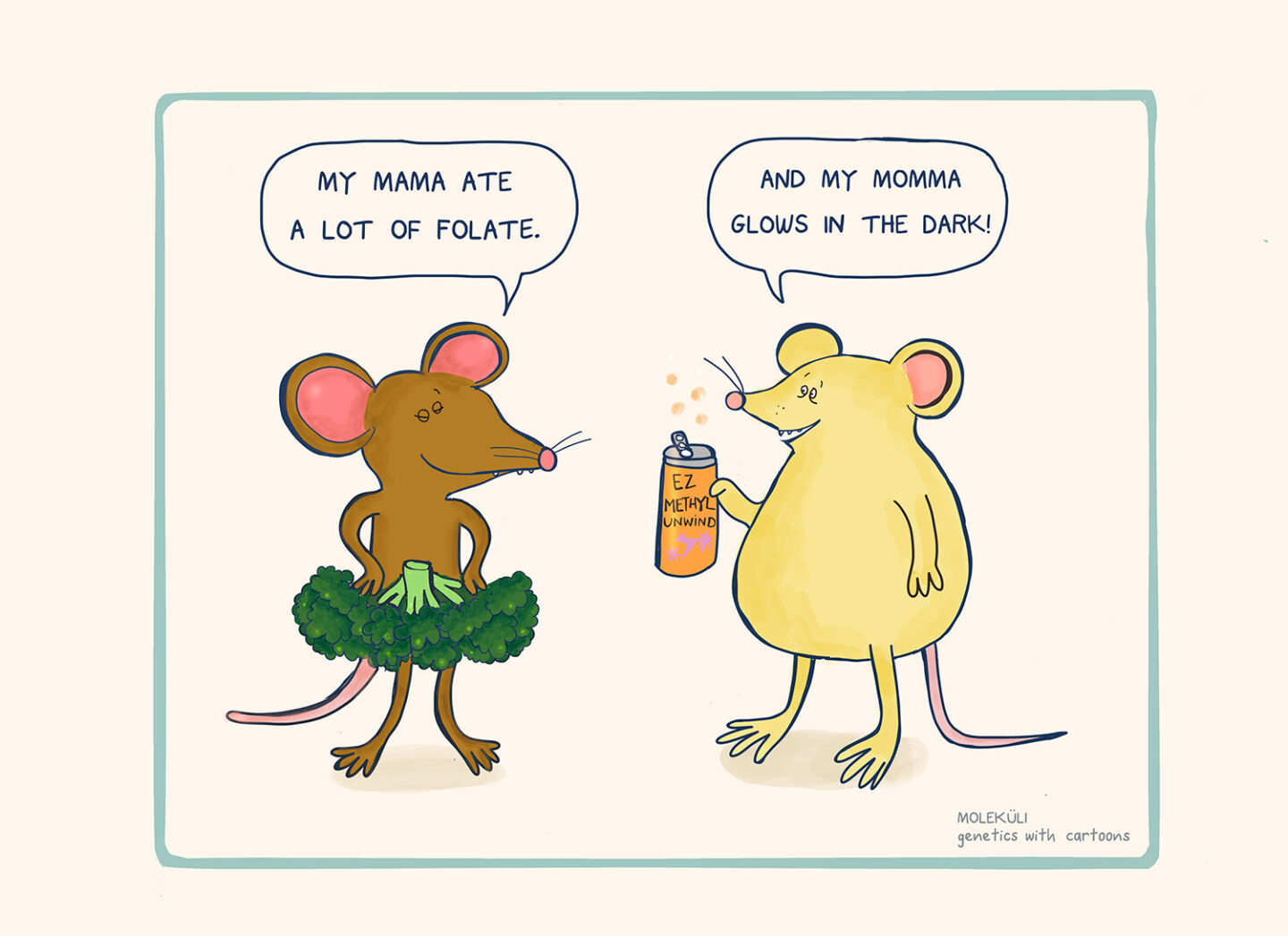
The golden example from epigenetics is the agouti mouse. Its coat colour depends on the epigenetic inactivation of a piece of “junk DNA”. Folate is needed for this epigenetic inactivation (also called methylation). If the mother eats a folate-rich diet during pregnancy, the pups turn out shiny brown instead of mustardy yellow.
I just bought this expensive new shampoo: it is full of proteins! Would this be a good nurturing for my hair?
Unfortunately: no. Not unless your hair has developed digestive organs. While it is true that hair is ‘woven’ from proteins, those proteins are built inside the follicle deep in the scalp. The amino
acids that make up proteins come from the food we eat and are processed by hundreds of chemical reactions and millions of cells. Pouring peptides onto your head in the hope of “feeding” your hair is about as effective as rubbing steak on your skin to build muscle. It would be great, if it worked! But it doesn’t.
I was platinum blond as a child. Now I have brown hair. What happened to that awesome colour? Can I get it back?
Many children are born with very light hair, because their pigment cells are still warming up. It is common for babies to be blonde even if their adult genes say “brunette”: the pigment production is a bit delayed.
Often, this is when your recessive blonde or red genes really showed through, before your dominant brown ones took over.
So, technically, this childhood hair colour was real. It is not (yet) possible to “get it back”, but you have never fully lost this hair colour! Recessive hair colour genes influence the shade, hue and undertones of your hair.
My friend’s hair became dark and curly after undergoing chemotherapy with Herceptin for breast cancer. She had grey hair before. How is this possible?
This phenomenon is sometimes called “chemo-curls” — and in the case of trastuzumab treatment, dermatology forums even refer to it as Trastuzumab tresses.
Curly regrowth after chemo (also known as “chemo curls”) is actually common across many types of cytotoxic chemotherapy. What seems unique to Herceptin, anecdotally, is the combination of darker, curlier and more robust regrowth, especially in individuals have gone grey (the repigmentation shocks them!).
The mechanism is not clear and there are hardly any peer-reviewed publications. An explanation could be that the cytotoxic chemotherapy wipes out old follicular memory and stem cells re-enter a “rejuvenation loop”. Melanocytes are epigenetically awakened and pigment returns. make room for a brand new blueprint.